Perfect Scores, Imperfect Results: What Core Web Vitals Aren't Telling You About Real Search Performance

Photo by Photo by Vitaly Gariev on Unsplash on Unsplash
The Dashboard Looks Great. The Business Doesn't.
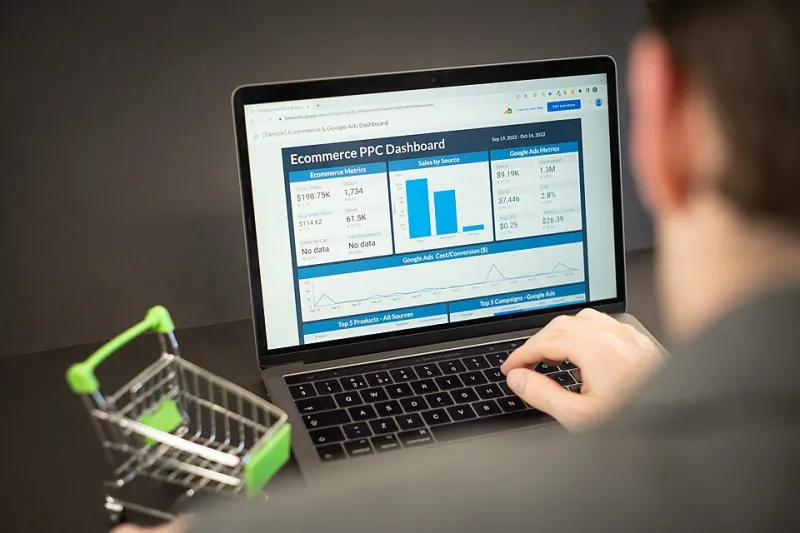
There is a specific kind of frustration familiar to many digital marketing teams across the United States: months of developer hours invested, PageSpeed Insights finally showing all green, and then — nothing. Rankings hold steady. Organic traffic barely budges. Conversion rates remain unchanged. The performance scores look immaculate, but the business results tell a different story.
This is the Core Web Vitals paradox, and it is more widespread than Google's official documentation would suggest.
Core Web Vitals — Largest Contentful Paint (LCP), Interaction to Next Paint (INP), and Cumulative Layout Shift (CLS) — were introduced as part of Google's Page Experience signal framework. The promise was straightforward: improve these metrics, improve your rankings. For many organizations, however, the reality has proven considerably more complicated.
Why the Metrics Can Be Gamed Without Improving Anything Real
The technical SEO community has become exceptionally skilled at optimizing specifically for the measurements Google uses, rather than the underlying experiences those measurements are designed to represent. This distinction matters enormously.
Consider LCP, which tracks how quickly the largest visible element on a page loads. A common optimization tactic is to make that element a small, fast-loading image or a block of above-the-fold text — technically satisfying the metric while leaving the rest of the page slow and frustrating to use. The score improves. The user experience does not.
Similarly, CLS scores can be dramatically improved by adding explicit size attributes to images and ad containers. This is genuinely good practice. But when development teams treat it as a box-checking exercise rather than a commitment to layout stability throughout the full page scroll, users still encounter jarring content shifts below the fold — shifts that Google's lab-based measurements may never capture.
The result is a growing class of websites that have learned to perform well on tests without performing well for people.
The Lab Data vs. Field Data Divide
One of the least-discussed nuances in the Core Web Vitals conversation is the fundamental difference between lab data and field data. PageSpeed Insights and Lighthouse measure performance under controlled, simulated conditions. Chrome User Experience Report (CrUX) data, by contrast, reflects actual user experiences across real devices and network conditions.
For many US-based businesses serving audiences on a wide range of devices — from the latest iPhone to older Android handsets on 4G connections in rural areas — lab scores can be misleadingly optimistic. A site may score 95 in a lab environment while delivering a substantially worse experience to a significant portion of its actual visitors.
Google's ranking systems draw primarily on field data, not lab scores. This means that teams celebrating PageSpeed victories based on simulated results may be operating with a false sense of progress. The users Google is actually observing may be having a different experience entirely.
What Actually Moves the Needle
If perfect Core Web Vitals scores are not reliably producing ranking improvements, what should US businesses be focused on instead?
The answer lies in understanding that page experience is one signal among many, and that Google's algorithm is sophisticated enough to weigh it in context. A technically fast page with thin content, poor internal linking, or weak topical authority will not outrank a slightly slower page that demonstrates genuine expertise and earns strong engagement signals.
Several performance-adjacent factors deserve more attention than they typically receive:
Session depth and dwell time patterns. When users land on a page and immediately return to the search results, that behavior communicates something to Google's systems regardless of how quickly the page loaded. Content that holds attention and encourages further exploration sends stronger quality signals than content that loads instantly but fails to engage.
Mobile usability beyond layout stability. CLS measures whether elements jump around, but it does not measure whether buttons are appropriately sized for touch interaction, whether forms are easy to complete on a small screen, or whether critical calls to action are accessible without excessive scrolling. These factors directly influence conversion rates and user satisfaction.
Server response consistency under real load. Time to First Byte (TTFB) is not a Core Web Vitals metric, but it underpins all of them. Organizations that optimize for peak performance while neglecting server behavior under actual traffic volumes may find that their scores degrade precisely when it matters most — during high-traffic campaigns or seasonal spikes.
Reframing the Measurement Strategy
The most effective approach treats Core Web Vitals as a floor, not a ceiling. Achieving acceptable scores eliminates a potential ranking disadvantage. It does not, by itself, create a ranking advantage.
Businesses serious about connecting technical performance to actual outcomes should establish measurement frameworks that link site speed data to business metrics. Tools like Google Analytics 4, combined with CrUX field data and server-side performance monitoring, allow teams to correlate real user performance experiences with conversion events, revenue per session, and bounce rate trends across device categories.
The question to ask is not "Did we achieve a green LCP score?" but rather "Are users in our actual audience completing the actions that matter, and is our technical infrastructure supporting or hindering that?"
A More Honest Conversation About Page Experience
Google has been careful, in its public communications, to describe Core Web Vitals as one signal among many. The SEO industry has sometimes been less careful, treating perfect scores as a reliable path to ranking improvement. The gap between those two positions is where a great deal of wasted effort accumulates.
For US businesses investing in technical SEO, the more productive conversation centers on genuine user experience — the kind that keeps visitors engaged, builds brand trust, and converts interest into action. Core Web Vitals, when pursued in that spirit rather than as a scoring exercise, can contribute meaningfully to that goal.
When they are pursued as an end in themselves, they tend to produce exactly the paradox described above: impressive dashboards, underwhelming results.